Best AI SEO Tools (2026): Top Picks
Discover the best AI SEO tools ranked by performance. We analyzed AI search patterns to identify tools that actually deliver results for SEO professionals.
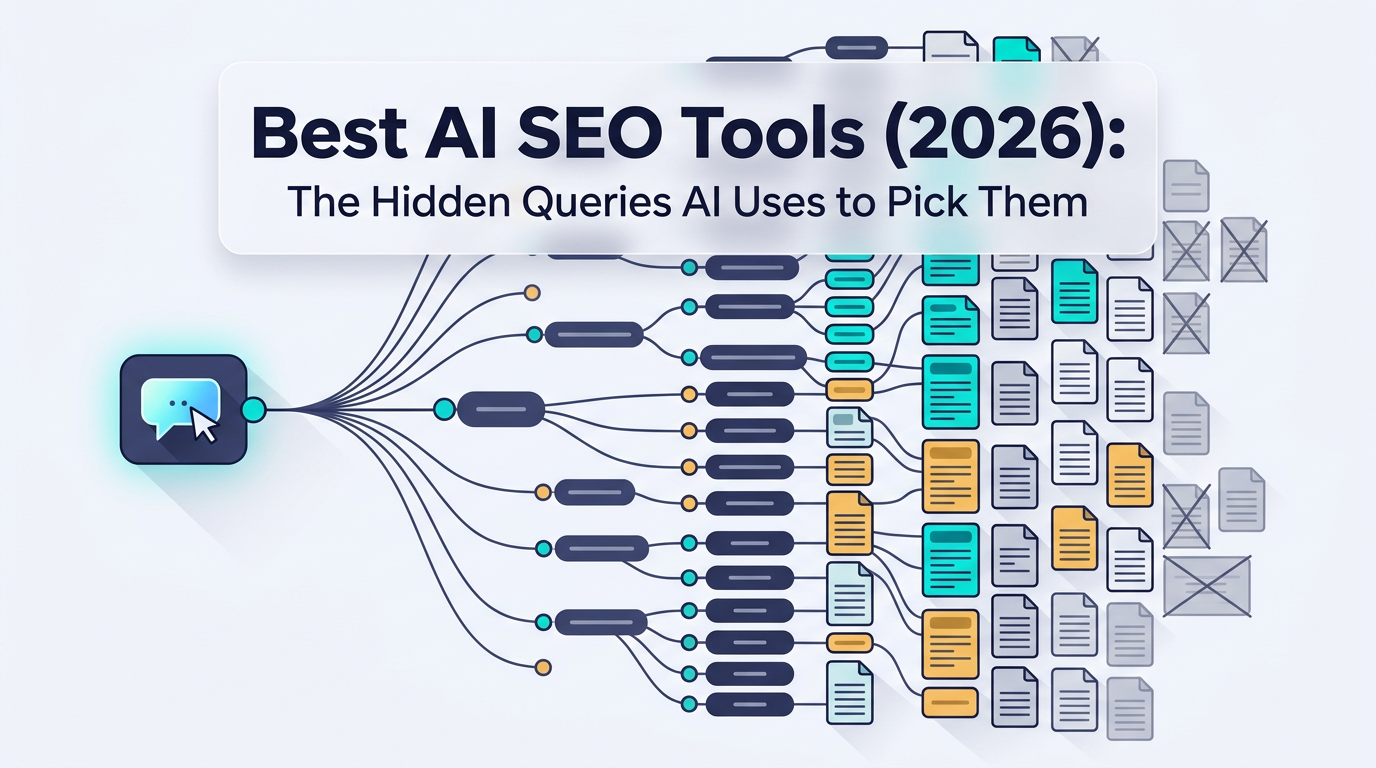
When you ask ChatGPT or Gemini for the best AI SEO tools, the engine never searches that exact phrase. It fans out into dozens of hidden sub-queries, retrieves around 30 pages, and synthesizes one answer. We captured all 287 of those sub-queries across 12 buyer questions, then used the data to build this guide. Jump to the tool list in Part 2 below.
Key takeaways
- AI fans out one buyer question into dozens of hidden sub-queries before answering.
- Our 287 raw sub-queries collapsed to 177 unique across 12 buyer questions.
- 31% of sub-queries add best/top/free/2026; 16% name a specific tool by brand.
- Ambiguous phrasing misfires: 'best GEO tools' returned geospatial GIS software twice.
- Best AI SEO tool depends on category: overall, free, agencies, ecommerce, AEO/GEO.
Part 1 — How AI Actually Searches for AI SEO Tools (the research)
We asked 12 real buyer questions about AI SEO tools to two leading AI assistants and captured every hidden sub-query each one issued before writing its answer. This is original research, not a vendor pitch. When you type "best AI SEO tools" into ChatGPT or Gemini, the model does not run that string against a search index. It performs query fan-out — decomposing your one question into many narrower searches, retrieving passages for each, then synthesizing a single response.
Google confirmed this fan-out behavior for AI Mode and AI Overviews in its own 2026 documentation, and practitioner measurements from Seer Interactive (November 2025) put the average at roughly 10.7 sub-queries per question for Gemini 3. Our 12 buyer questions produced 287 raw sub-queries before any answer was synthesized. After removing exact duplicates, that collapsed to 177 unique sub-queries.
The takeaway is structural: you are never competing for the phrase a human typed. You are competing for the dozens of literal sub-queries the engine generated on its own — many of which have zero traditional search volume and appear in no keyword tool. Part 1 shows exactly what those sub-queries looked like. Part 2 maps those sub-queries to the AI SEO tools that actually surface, organized by category.
What You Ask vs. What AI Actually Searches
Captured across 12 buyer questions × 2 AI assistants — 287 raw sub-queries, 177 unique. ✗ = off-topic drift (the AI took the prompt literally).
| Buyer question (what you ask) | What AI actually searched (fan-out sub-queries) |
|---|---|
| best AI SEO tools | best ai seo tools · ai seo tools · jasper ai seo features · top ai seo software · surfer seo ai features · surferseo ai features · frase ai seo · frase ai seo content optimization · rankmath content ai features · popular ai seo tools surferseo clearscope neuronwriter koalawriter outranking · ai powered seo platforms · ai tools for search engine optimization |
| best AI SEO software | best ai seo tools · jasper ai seo features · top ai seo software · top ai seo tools · surfer seo ai features · best ai seo software · surferseo ai features · neuronwriter ai seo tool · best ai seo software reviews · ai seo software tools comparison · best ai seo tools surferseo neuronwriter outranking frase jasper · ai seo software tools surfer seo frase jasper neuronwriter outranking scalenut se ranking clearscope · surferseo features ai · marketmuse ai content optimization · jasper ai seo · frase io ai seo content optimization · top ai seo tools comparison · ai seo platforms comparison |
| best AI SEO software for agencies | top ai seo software for agencies · best ai seo tools for agencies · ai seo tools for marketing agencies reviews · ai seo software for agencies surferseo clearscope marketmuse contentpace scalenut comparison · ai seo platform for agencies features pricing · best ai-powered seo tools · ai seo platform for agencies surfer seo clearscope marketmuse dashword scalenut content at scale comparison · ai seo platform agencies features pricing jasper surfer scalenut · ai seo software for agencies surfer writerzen growthbar scalenut content at scale comparison · ai seo platform specifically for agencies white label · enterprise seo platforms with ai features: semrush ahrefs se ranking brightedge seo clarity · ai seo platform for agencies · ai seo software comparison · surfer seo ai features for agencies · seo automation platform ai content links agencies · ai seo platform for agencies surfer seo features pricing · seoclarity ai seo platform agencies · scalenut ai seo content marketing platform · ai seo platforms for marketing agencies · leading ai seo software for agencies · leading ai seo platforms for agencies · leading ai-powered seo platforms for agencies · ai seo platforms for agencies reviews · leading ai seo tools for marketing agencies · ai seo tools for agencies · best seo software for agencies using ai |
| AI SEO tools for ecommerce | ai seo tools for ecommerce · ai seo tools for e-commerce · best ai seo software for online stores · ai seo for online stores · ai product description generator seo shopify · best ai seo tools for ecommerce · ai seo tools ecommerce · ai-driven seo platforms content optimization · surfer seo · clearscope ai seo · shopify ai seo apps · ai seo tools ecommerce product description · ai seo platform for shopify woocommerce bigcommerce · ai driven seo platforms for e-commerce · how ai helps e-commerce seo · e-commerce ai seo platforms · ai powered seo for online stores · best ai seo software for e-commerce |
| free AI SEO tools | best free ai seo tools · free ai seo tools · ai seo tools for content optimization free · ai seo tools for content creation free · free ai tools for keyword research · free ai tools for on-page seo · free ai keyword research tools · free ai tools for keyword research seo |
| best AI visibility tools | ai seo tools · top ai seo tools · ai visibility tools · ai-powered seo visibility tools · best ai visibility tools · ai content optimization tools · top ai visibility platforms · ai-powered seo visibility tools rank tracking · ai visibility tools marketing · ai content optimization tools surferseo clearscope marketmuse neuronwriter comparison · ai seo visibility ranking monitoring tool · ai brand monitoring online visibility tools · ai tools for website visibility monitoring and serp tracking · ai marketing tools · top ai content optimization tools · ai powered seo tools · ai content performance tracking · ai for digital marketing visibility |
| best AEO tools 2026 | answer engine optimization tools · best aeo tools · top aeo platforms · ai-powered aeo tools · ai-powered seo tools · aeo answer engine optimization tools entities schema · best aeo tools answer engine optimization · aeo tools for seo · optimize for ai answer engines tools · aeo tools structured data faq schema · aeo answer engine optimization tools · best answer engine optimization tools · tools for optimizing for ai answer engines (sge perplexity chatgpt) · aeo tool list answer engine optimization · aeo software comparison · ✗ advanced seo tools future · top aeo tools · best aeo platforms for businesses · new aeo technologies · ai in aeo · ✗ seo tools predictions · latest advancements in aeo tools · seo tools with automation |
| best GEO tools | best geo tools · ✗ top geospatial tools · ✗ leading gis software |
| AI search optimization tools | ai seo tools · ai powered search optimization platforms · best ai search optimization software · ai-powered seo tools list · ai search optimization tools for websites · ai-powered seo and search optimization tools · ai seo tools list · ✗ calculator: 1+1 |
| Profound alternatives | ✗ profound synonyms · ✗ words similar to profound · ✗ deep alternatives · ✗ meaningful alternatives · ✗ insightful alternatives · ✗ intense alternatives |
| how to get cited in ChatGPT | how to get cited in chatgpt · ✗ how to cite chatgpt in academic writing · how does chatgpt choose web sources and citations · how does chatgpt choose sources citations web.run search_query reference ids · how does chatgpt choose sources for citations web.run · openai how chatgpt uses citations web browsing sources · how chatgpt citations work · can chatgpt cite sources · ✗ chatgpt citation style · ✗ how to get cited in academic writing when using chatgpt · ✗ citing chatgpt in research papers · ✗ referencing chatgpt content · ✗ how to get cited in academic papers using chatgpt · ✗ citing ai in research papers · ✗ chatgpt citation guidelines · ✗ how to properly cite ai generated content · ✗ citing ai generated content · ✗ best practices for citing ai |
| tools to track AI search visibility | ai search visibility tracking tools · how to track ai search engine ranking · tools to track ai search visibility sge · monitor ai overviews visibility seo tools · platforms track visibility in chatgpt perplexity ai search · tools to track ai overviews visibility · ai overviews monitoring seo tools · track visibility in sge ai snapshots tools · monitor bing copilot or chatgpt answers for brand mentions tools · tools to track ai search visibility sge ai overviews · platforms to monitor visibility in generative ai answers perplexity chatgpt · tools to monitor ai overviews visibility · track content visibility in ai answers like chatgpt perplexity · tools to track ai overviews visibility seo · track visibility in google ai overviews tools · seo tools for ai search · monitoring ai powered search results · how to track ai search engine visibility · tools for measuring ai serp ranking · monitor ai generative search performance · how to measure ai search performance · tools to monitor ai powered search engine rankings · how to track ai search ranking · measuring ai search performance · tools to monitor ai-powered search engine results |
The table below maps each buyer question we tested to a sample of the hidden sub-queries the assistants fanned out into before answering. Read it as the gap between human phrasing and machine retrieval.
What the data shows: modifiers, segments, and tool-name rates
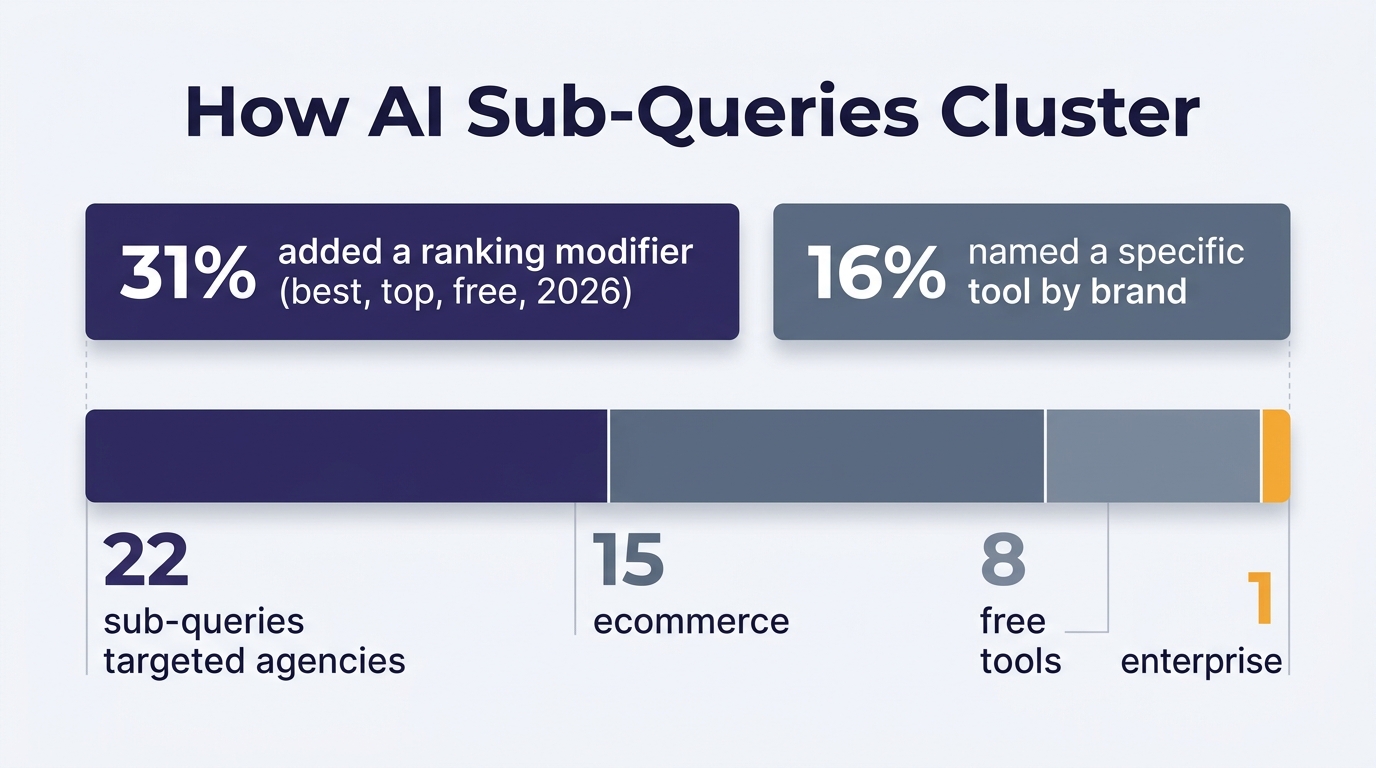
The 177 unique sub-queries cluster into clear, shareable patterns that tell you how to write content AI will actually retrieve. Roughly 31% of sub-queries added a ranking modifier — words like "best," "top," "free," or "2026" — even when our original buyer question contained none of them. The engine inserts commercial intent on its own, which means pages that explicitly answer "best free AI SEO tools 2026" outperform pages that bury the same information under a generic title.
About 16% of the sub-queries named a specific tool by brand. Once an assistant has a candidate in mind — Semrush, Ahrefs, Surfer SEO, Profound — it runs verification searches like "Surfer SEO AI features" or "Profound AEO platform" to confirm and enrich its draft answer. If your brand has no dense, factual page answering that named query, you get paraphrased without a citation or dropped entirely.
The sub-queries also split sharply by audience segment. Across the set, 22 sub-queries targeted agencies (white-label, multi-client, reseller phrasing), 15 targeted ecommerce (Shopify, online stores, product feeds), and 8 targeted free tools. Only 1 sub-query used explicit enterprise phrasing, which suggests enterprise buyers reach these tools through branded and feature-specific searches rather than the head term.
The practical lesson: each segment is a distinct retrieval lane. A single page that tries to serve agencies, Shopify stores, and free-tier users at once matches none of the literal sub-queries well. Splitting coverage by segment — one tight answer per lane — is what gets pulled into the synthesized response.
The ambiguity trap: why 'best GEO tools' returns the wrong software

AI matches the literal sub-query, so ambiguous phrasing retrieves off-topic results — and our data captured the failure modes precisely. Because the engine searches the words, not your intent, it walks straight into word-sense collisions that no human buyer would make.
The sub-query "best GEO tools" returned geospatial and GIS software in 2 of our captured fan-outs. The model read "GEO" as geography, not generative engine optimization, and surfaced mapping platforms instead of AI-visibility tools. The brand name "Profound" triggered 6 thesaurus and word-sense results — pages about "deep," "meaningful," and "insightful" as synonyms — before the engine locked onto the company. And "how to get cited in ChatGPT" produced 11 academic-citation sub-queries: guides on APA format, scholarly referencing, and how to cite ChatGPT in a research paper, rather than how to make your content the source ChatGPT quotes. We also logged 3 noise or trends sub-queries that drifted into general AI-industry news.
This is not a quirk; it is the mechanism. The retriever embeds the literal sub-query and pulls passages with high cosine similarity to those exact tokens. Ambiguous tokens pull ambiguous neighbors.
The lesson cuts two ways. First, name things unambiguously on your own pages: write "generative engine optimization (GEO)" in full, pair "Profound" with "AI search visibility platform" in the same sentence, and disambiguate "get cited" as "get cited as a source by ChatGPT." Second, precise, on-topic content wins citations because it is the only thing the retriever can confidently match. Vague, clever, or pun-laden headings are invisible to a system that reads literally.
Part 2 — The Best AI SEO Tools (2026), by Category
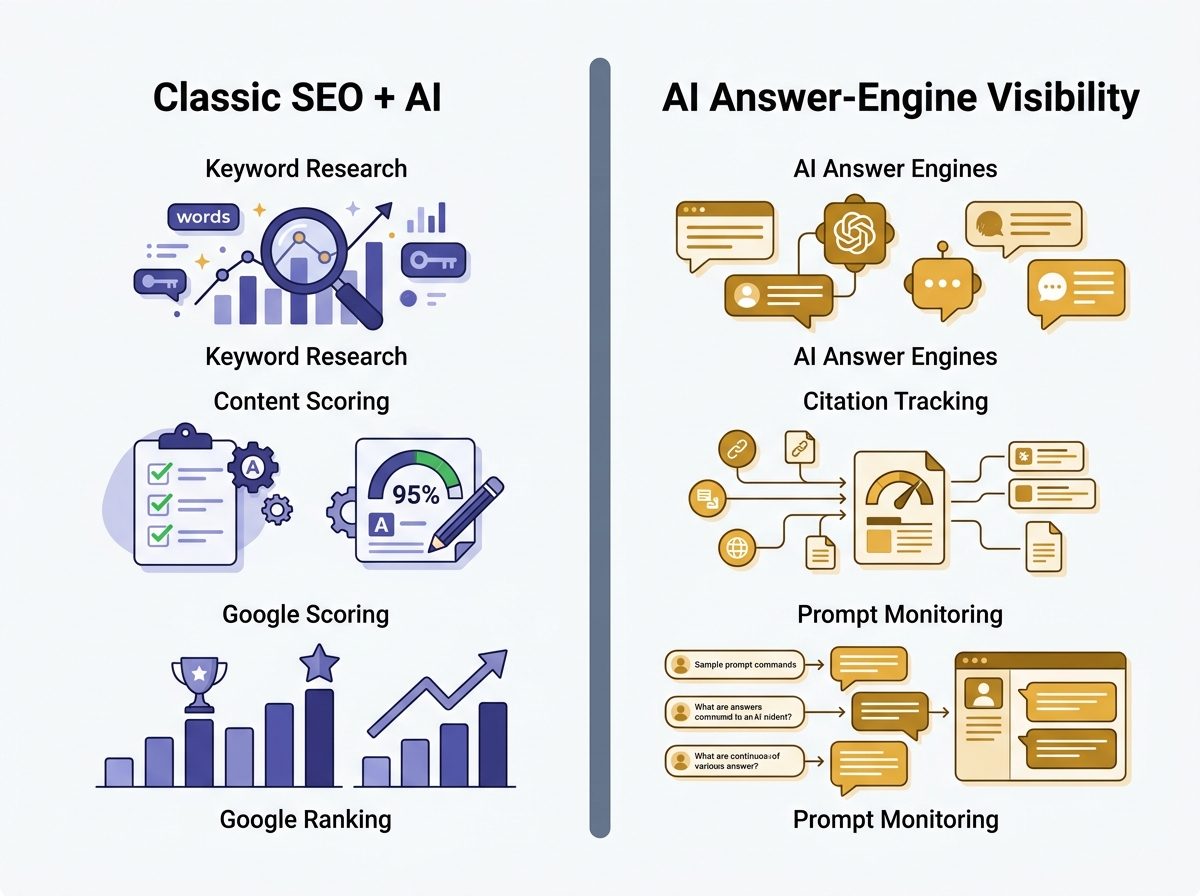
The best AI SEO tool depends entirely on your category — there is no single winner across every use case. We organize the tools into six lanes that mirror the segment splits from our Part 1 research: best overall, best free, best for agencies, best for ecommerce, best AEO/GEO, and best AI-visibility tracking. Each lane names real tools with a one-line "best for," so you can match a tool to your literal need rather than a head term.
Two distinct tool families now live under "AI SEO." The first optimizes classic Google rankings with AI-assisted research and content scoring — Semrush, Ahrefs, Surfer SEO, Frase, Clearscope. The second optimizes and tracks visibility inside AI answer engines like ChatGPT, Gemini, and Perplexity — Profound, Otterly, Peec AI, Scrunch AI, AthenaHQ, and LLMRanks. Most teams in 2026 need one from each family. The comparison table below summarizes every category, the leading tools, and what each is genuinely best for.
These picks reflect each tool's documented positioning and our read of the market — not hands-on testing. Verify pricing and fit before you buy.
Best overall and best free AI SEO tools in 2026
Semrush is the best overall AI SEO platform for most teams in 2026 because it combines keyword research, competitive analysis, content scoring, and AI-Overview tracking in one suite. Its breadth is the reason: you can run a topical-authority audit, find striking-distance queries, and check whether you appear in Google AI Overviews from a single dashboard. Best for: marketing teams that want one platform across classic SEO and AI search.
Ahrefs is the best overall alternative when backlink and brand-mention data matter most. Its index is among the largest for link and mention discovery, which is decisive given that unlinked brand mentions now correlate more strongly with AI visibility than backlinks (Ahrefs' 75,000-brand study measured web mentions at Spearman 0.664 versus 0.218 for backlink count). Best for: teams building entity authority and tracking brand mentions.
Surfer SEO is the best content-optimization tool for matching a page to what currently ranks. Its content editor scores drafts against the live SERP using term and entity coverage targets. Best for: writers optimizing a single page against a specific query.
For free options, Frase offers a usable free tier for content briefs and outline research, and its AI-assisted SERP analysis helps you see the entity gaps before you write. Best for: solo creators who want structured briefs at no cost. For free AI keyword research specifically, Semrush and Ahrefs both ship free-account limits and free keyword generators, and Google's own Keyword Planner remains free with a Google Ads account. Tools like MarketMuse, NeuronWriter, and Clearscope round out the content-optimization category at higher price points for teams that want deeper topic modeling.
Best AI SEO tools for agencies and ecommerce in 2026
Semrush is the best AI SEO platform for agencies because of its multi-client architecture, white-label reporting, and the Agency Growth Kit add-on for client management. Agencies need to manage dozens of domains, generate branded reports, and resell dashboards — Semrush handles all three in one login. Best for: agencies running many client accounts that need white-label reporting.
For agencies that want a dedicated white-label content layer, Surfer SEO and Frase both support multi-seat workflows and shareable content scores, letting writers across clients work against consistent optimization targets. Best for: content agencies standardizing quality across many writers.
For ecommerce, Surfer SEO is the strongest AI content tool for optimizing category and product descriptions against competitive SERPs, because product and category pages live or die on precise term coverage. Best for: online stores optimizing category-page copy at scale. Semrush again serves ecommerce well through its market and competitor analysis, and its e-commerce-specific reports help you size demand before building product clusters. There is no single dominant "AI SEO platform for Shopify" — Shopify stores typically pair a content tool like Surfer or Frase with a research suite like Semrush or Ahrefs, since Shopify's own SEO surface is limited and the heavy lifting happens in research and content. Best for: Shopify merchants combining a research suite with a content optimizer.
Best AEO/GEO and AI-visibility tracking tools in 2026
The best AEO/GEO and AI-visibility tools track and improve how often AI answer engines cite your brand across ChatGPT, Gemini, and Perplexity — a category that barely existed before 2024. These tools run panels of prompts against each engine on a schedule, parse which domains get cited, and compute your citation share against competitors.
Profound is among the most established AI-visibility platforms, built for enterprise teams that need detailed answer-engine analytics and prompt-level tracking across ChatGPT, Gemini, Perplexity, and AI Overviews. Best for: enterprise brands needing deep, multi-engine citation analytics.
Otterly is a lightweight option focused on monitoring brand mentions and link citations across AI search results, with straightforward prompt tracking. Best for: small teams that want simple AI-mention monitoring.
Peec AI focuses on competitive AI-visibility benchmarking, showing how your share of citations stacks against named rivals over time. Best for: teams that care most about competitive citation share.
Scrunch AI tracks brand presence across AI engines and emphasizes the broader picture of how AI agents perceive and represent a brand. Best for: brands auditing how AI describes them, not just whether they appear.
AthenaHQ offers GEO-focused tracking and optimization recommendations aimed at improving answer-engine presence. Best for: teams that want tracking paired with actionable GEO guidance.
LLMRanks tracks your visibility and ranking across AI answer engines, surfacing which prompts cite you and where you sit relative to competitors. Best for: teams that want focused AI-search rank tracking without enterprise overhead. The honest reality: these tools overlap heavily, and the right pick depends on team size, budget, and whether you need analytics-only monitoring or tracking plus optimization guidance. Trial two or three against the same prompt set and compare what each surfaces.
How to get your AI SEO tool cited by ChatGPT and AI Overviews
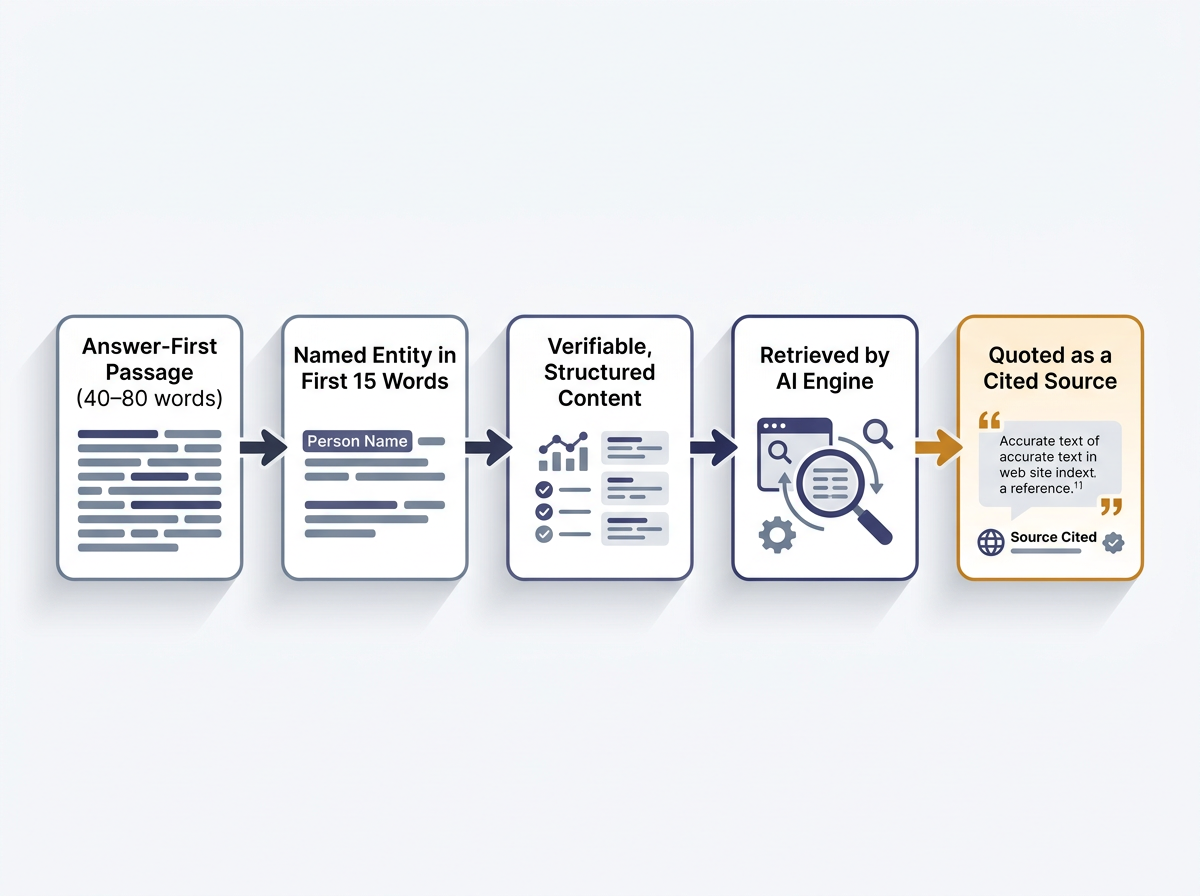
To get cited by ChatGPT and AI Overviews, publish verifiable, answer-first content that the engine can retrieve and quote without rewriting — there is no paid shortcut. Citation is earned through structure and substance, not bought.
Start with answer-first passages. Open each section with a 40–80 word direct answer to the exact sub-query, with a named entity in the first 15 words. This block is what gets quoted verbatim; in citation testing, that opening passage is reused in 60–70% of citations when it directly answers the query and names the entity early.
Raise your fact density. Pair named entities with dates and numbers — "Surfer SEO scores drafts against the live SERP" beats "a popular optimization tool." Engines latch onto specific strings because those strings reappear in the rewritten sub-query. Add primary-source citations with deep links to official documentation, because content that links its claims to verifiable sources reduces the model's hallucination risk and gets preferentially selected.
Remember that retrieval rides on the classic index. ChatGPT's Search mode pulls from Bing's index; AI Overviews and Gemini pull from Google's. If Bing and Google cannot rank you, the AI cannot retrieve you. Technical SEO — crawlability, fast Core Web Vitals, server-rendered HTML — is the eligibility gate for AI citation, not a separate track.
Finally, measure it. Use an AI-visibility tool from the category above to run your target prompts against each engine on a schedule and track whether your citation share rises. Avoid any vendor promising paid placement or bought citations in AI answers — that is not how these systems work, and the spend buys nothing durable.
FAQ
How does ChatGPT choose web sources and citations?
ChatGPT rewrites your question into multiple sub-queries, retrieves results from Bing's index, re-ranks them by passage relevance, and cites 3–8 sources whose passages best match each sub-query. It favors content that directly answers the literal query with verifiable, attributable claims, because that reduces the model's hallucination risk during synthesis.
How do I get cited in ChatGPT?
Publish answer-first passages of 40–80 words that name the entity in the first 15 words, raise fact density with dates and numbers, and cite primary sources with deep links. Ensure your pages are indexable in Bing, since ChatGPT Search retrieves from Bing. There is no paid path to citation — it is earned through structure and substance.
Can ChatGPT cite sources?
Yes. In Search mode, ChatGPT cites live web sources inline, typically 3–8 per answer, drawn from Bing's index and OpenAI's own crawl. Without web access, it relies on parametric memory and may not provide reliable citations. The cited URLs almost always come from pages whose passages closely match the rewritten sub-queries.
How do I track AI search rankings?
Use an AI-visibility tool such as Profound, Peec AI, LLMRanks, Otterly, Scrunch AI, or AthenaHQ. These run a panel of target prompts against ChatGPT, Gemini, and Perplexity on a schedule, parse which domains get cited, and compute your citation share versus competitors over time. Classic rank trackers do not capture this.
How do I measure AI search performance?
Measure citation share — how often you are cited for a defined prompt set per engine — plus entity presence and mentions-without-clicks. Referral traffic from chatgpt.com and perplexity.ai appears in analytics, but most citations earn no click, so run prompt-based monitoring against each engine's API to capture visibility that classic analytics misses.
What are the best free AI SEO tools in 2026?
Frase offers a usable free tier for content briefs and SERP research. Semrush and Ahrefs provide free-account limits and free keyword generators, and Google Keyword Planner is free with a Google Ads account. For AI keyword research specifically, the free generators from Semrush and Ahrefs cover most solo-creator needs without payment.
What is the difference between AEO tools and GEO tools?
AEO (answer engine optimization) and GEO (generative engine optimization) tools overlap heavily and are often used interchangeably in 2026. Both track and improve how AI engines like ChatGPT, Gemini, and Perplexity cite your brand. GEO emphasizes generative-answer synthesis; AEO emphasizes direct-answer extraction. In practice, Profound, Peec AI, AthenaHQ, and LLMRanks span both.
What are the best AI search visibility tracking tools?
Leading AI search visibility trackers in 2026 include Profound for enterprise analytics, Peec AI for competitive citation benchmarking, Otterly for lightweight mention monitoring, Scrunch AI for brand-perception auditing, AthenaHQ for tracking plus GEO guidance, and LLMRanks for focused AI-search rank tracking. They overlap, so trial two or three against the same prompt set.