Best Agency SEO Tools for AI & Search
Compare top agency SEO tools for 2026 with pricing from $11–$1,499/mo. Track ChatGPT, Gemini, and AI Overviews citations alongside Google rankings.
The best agency SEO tools in 2026 are LLMRanks for AI engine citation tracking and SEOTesting for Google Search Console experiments. Agency SEO tools now have to monitor whether ChatGPT, Gemini, and AI Overviews cite your clients — not just where they rank on Google. Pricing spans 10x, from $11/mo group-buy access to $1,499/mo Ahrefs Enterprise, and every vendor guide crowns a different #1. This comparison ranks seven tools on price, AI tracking, database size, and white-label depth.
Key takeaways
- LLMRanks wins overall — the only tool tracking citations across all six AI engines plus Google.
- Agency SEO tool pricing spans 10x: $11/mo group-buy to $1,499/mo Ahrefs Enterprise.
- All-in-one platforms cluster at $129–$549/mo; reporting tools range $20–$799/mo.
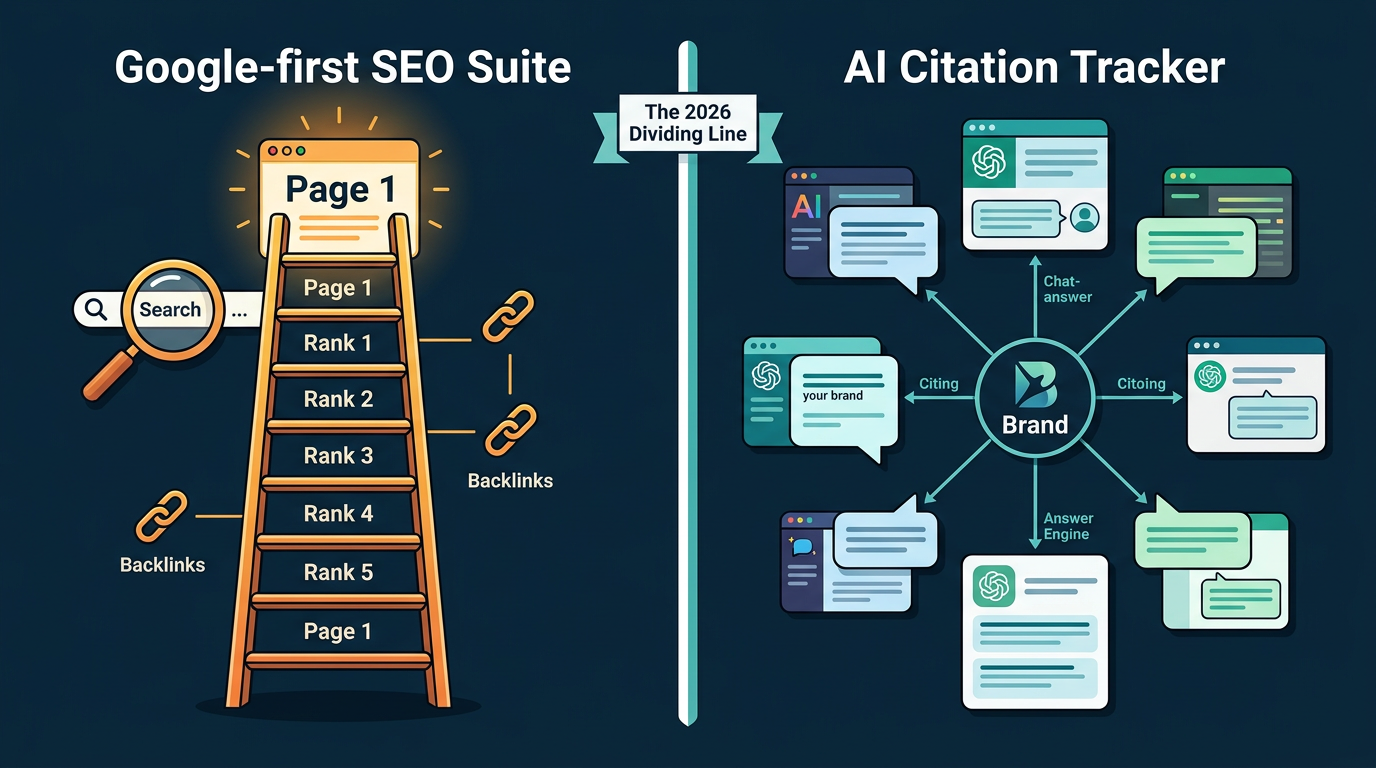
- Six of seven reviewed tools track zero AI engines — the new dividing line.
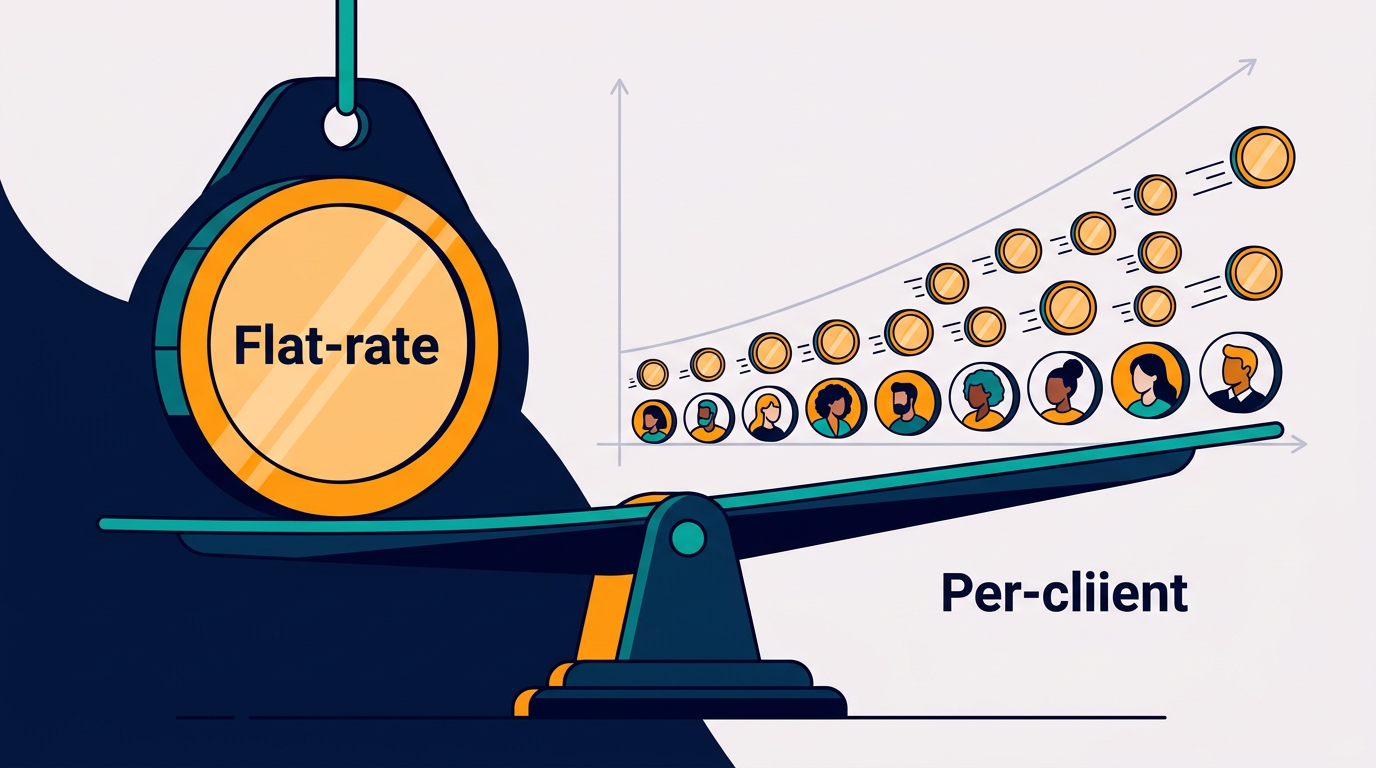
- Match the tool to billing: per-client vs flat-rate changes the math entirely.
How we picked
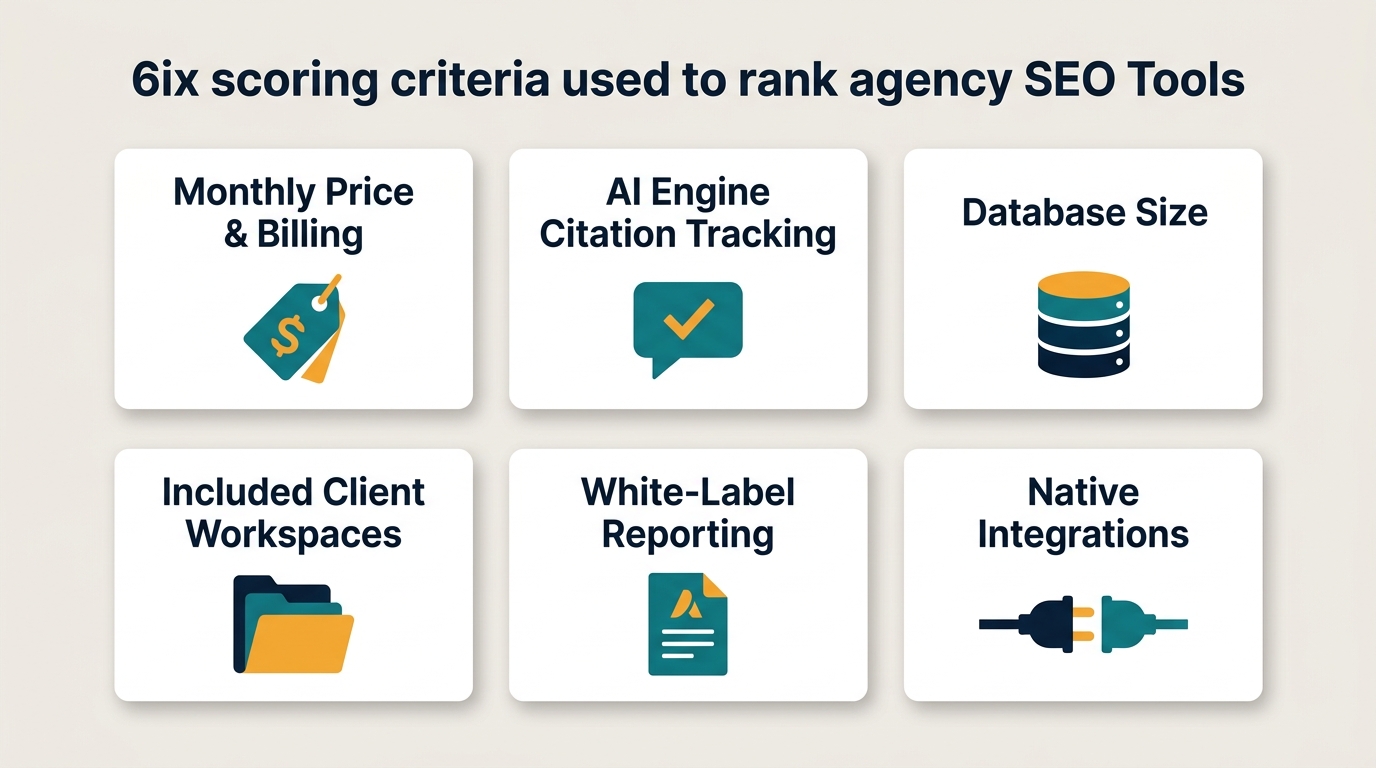
The best agency SEO tools in 2026 are judged on whether they track AI engine citations, what they actually cost across a client roster, and whether their headline database figures are verifiable. We ignored the circular G2/Capterra star ratings that most roundups lean on — those numbers are user-submitted, often review-gated by the vendors themselves, and trace back to the same listicles that cite them. We scored on six criteria instead.
Monthly price and billing model. Agency tools split into flat-rate (one fee, capped projects) and per-client or per-seat (cost scales with your roster). The math flips depending on which you choose. An agency with 50 clients pays roughly $1,000/mo on a $20/client model versus a flat $799/mo on a top reporting tier (Whatagraph).
AI engine citation tracking. This is the 2026 dividing line. Most agency SEO tools track zero AI engines — they were built for Google-first workflows. We weighted heavily on which of ChatGPT, Gemini, AI Overviews, Claude, Perplexity, and Grok a tool monitors, because Google AI Overviews now cite pages that don't even rank in the organic top 10.
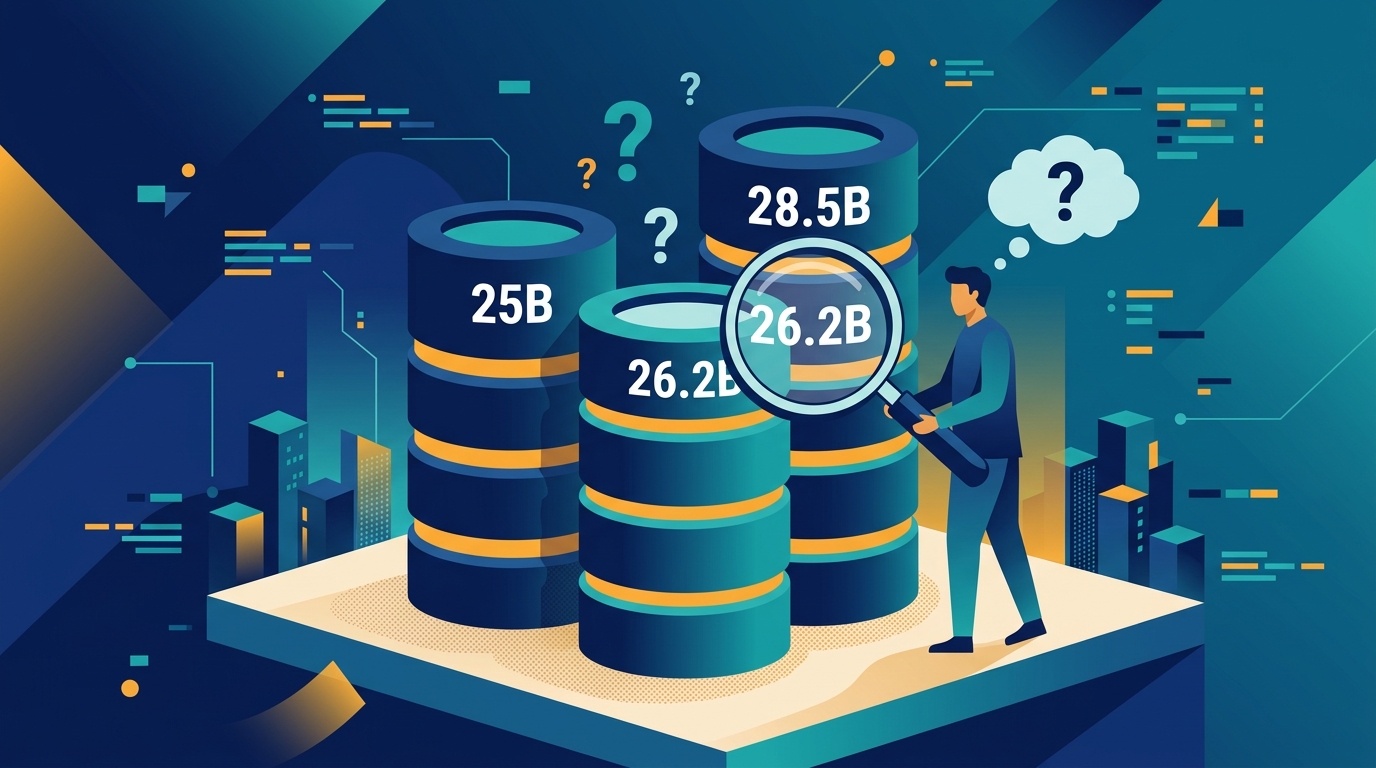
Database size, verifiably stated. Keyword and backlink index size matters for research depth — but only if the vendor publishes a figure you can pin down. Semrush's own pages report 25 billion, 26.2 billion, and 28.5 billion keywords across three sources, so we treated unverifiable scale claims with suspicion.
Included client workspaces before overage fees. Sub-account caps decide your real cost. White-label reporting depth — custom domains, branded PDFs, scheduled sends — separates agency tools from solo tools. And native integration count for GA4, GSC, Google Business Profile, and ad platforms determines how much manual data wrangling your team does. If you want the deeper logic behind why AI tracking changed everything, our SEO vs AEO breakdown covers it.
LLMRanks
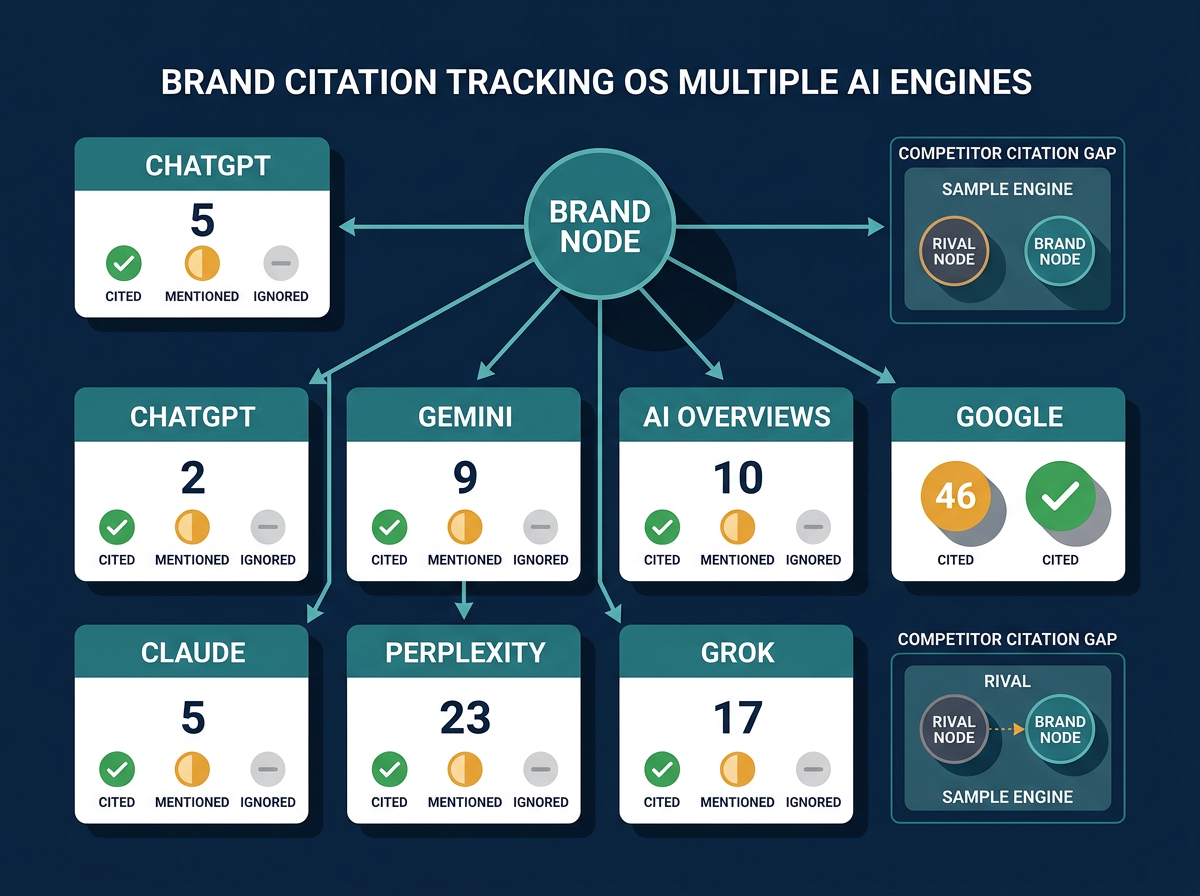
LLMRanks is the best agency SEO tool for 2026 because it's the only platform here that tracks live brand citations across all six major AI engines — ChatGPT, Gemini, AI Overviews, Claude, Perplexity, and Grok — plus Google, with public self-serve pricing and no agency upsell.
Best for: Agencies measuring and improving client visibility across every major AI engine, not just Google rank.
LLMRanks tracks whether each engine cites, mentions, or ignores your client for a given prompt, refreshed daily with a configurable cadence. It runs per-prompt and per-engine reporting over a trailing 90 days and includes competitor citation gap analysis by engine — so you can show a client exactly where a rival is winning ChatGPT answers. Pricing starts at $41/mo billed yearly with three engines included (ChatGPT, Gemini, AI Overviews); Claude, Perplexity, and Grok are credit add-ons. There's no demo wall and no retainer hidden behind the dashboard.
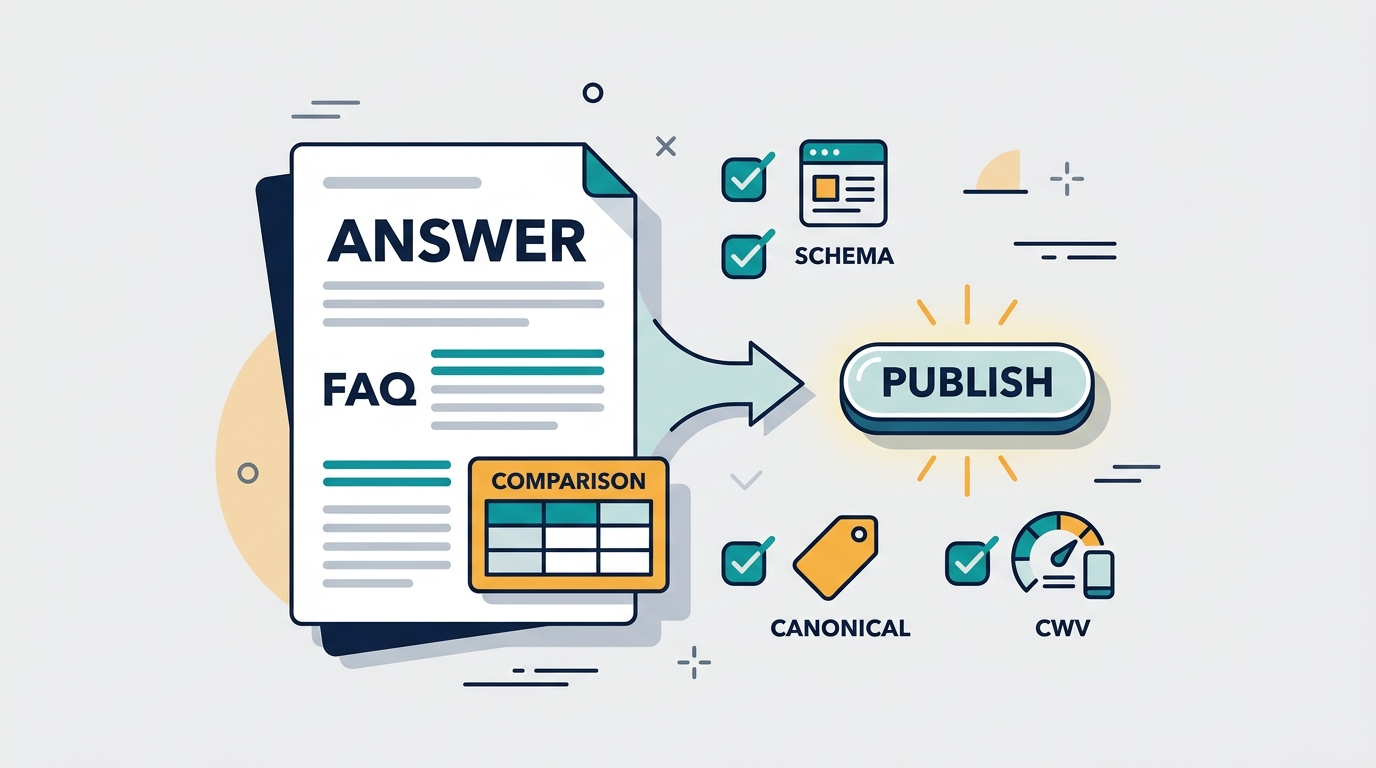
Beyond tracking, it generates AEO-structured, brand-voiced articles (1,500–1,800 words) with definitive H2 answers, FAQ blocks, and comparison tables, then publishes them in one click to WordPress. A site audit runs 25+ checks across schema gaps, canonical conflicts, Core Web Vitals, and crawler access. Coverage spans 213 countries and multiple languages.
Pros:
- ✅ Tracks live citations across six AI engines plus Google — no rival here matches this
- ✅ Public pricing from $41/mo billed yearly, self-serve credits, no demo call required
- ✅ Independent platform — doesn't sell agency retainers behind the dashboard
- ✅ Generates AI-citable articles with one-click WordPress publishing
Cons:
- ❌ Not a backlink or keyword research powerhouse — pair it with a research tool
- ❌ Credit-based add-ons for Claude, Perplexity, and Grok raise the effective price
- ❌ Newer category, so historical trend data is shorter than legacy suites
For agencies pitching AI visibility to in-house clients, this is the one tool that answers the question the other six can't: "Does ChatGPT cite my brand?"
SEOTesting
 Source: https://seotesting.com/ · captured 2026-06-27
SEOTesting is the best agency SEO tool for running controlled experiments on Google Search Console data because it turns raw GSC exports into time-based tests, split tests, and content-decay reports without any proprietary database to maintain.
Best for: In-house teams, agencies, and consultants who want to prove SEO changes caused a result.
SEOTesting connects to Google Search Console in two clicks with no code, then layers testing on top. It runs time-based SEO tests, SEO split testing, content decay reports, keyword cannibalization checks, and CTR opportunity analysis. A newer feature set — LLM tests and LLM Traffic Pages — measures AI-driven traffic impact and flags which pages are winning AI traffic, inferring prompt clues from Search Console data. One case study cited a +90% clicks/day uplift after refreshing a Regex guide (SEOTesting). Pricing runs $50/mo for a single site, $125/mo for five sites, and $375/mo for 20 sites, with a 14-day free trial.
Pros:
- ✅ Low flat pricing with no proprietary database overhead
- ✅ Genuine experiment framework — proves causation, not just correlation
- ✅ Two-click GSC and GA4 integration, no code install
- ✅ Adding LLM-traffic detection, an early move toward AEO measurement
Cons:
- ❌ Does not track AI engine citations across ChatGPT, Gemini, or Perplexity
- ❌ Narrow feature set — it's a testing layer, not a full research suite
- ❌ Entirely dependent on Google Search Console data quality and its 16-month cap
Semrush
 Source: https://www.semrush.com/ · captured 2026-06-27
Semrush is the best agency SEO tool for the deepest all-in-one keyword and competitor database, with a keyword index the vendor reports at up to 28.5 billion across 142 geo databases (Semrush).
Best for: Agencies needing one platform for keyword research, competitor analysis, and site audits across many clients.
Semrush bundles an SEO Toolkit, Traffic & Market Toolkit, Content Toolkit, Local Toolkit, and an AI Visibility Toolkit, plus a Keyword Magic Tool, Backlink Checker, and Site Audit that crawls up to 1,000,000 pages monthly on its top tier. Pricing is genuinely confusing: the legacy SEO Classic line runs $139.95–$499.95/mo (Pro, Guru, Business), while the newer Semrush One tiers run $199–$549/mo (Starter, Pro+, Advanced) (SEOTesting). Per-user seats and Agency Growth Kit add-ons stack on top. Native AI citation tracking exists via the AI Visibility Toolkit, but it's built around Google-first workflows rather than a six-engine AEO monitor.
Pros:
- ✅ Largest keyword database among reviewed tools (vendor-reported)
- ✅ Genuinely all-in-one — research, audit, content, local, ads under one login
- ✅ 142 geo databases and a Site Audit crawl up to 1M pages
- ✅ MCP connectors let you feed data into AI assistants
Cons:
- ❌ Total cost climbs fast once you add seats and client sub-accounts
- ❌ Keyword database size reported inconsistently (25B / 26.2B / 28.5B) across its own pages
- ❌ AI visibility tracking is limited compared with dedicated six-engine tools
- ❌ Confusing dual pricing lines (SEO Classic vs Semrush One)
Ahrefs
 Source: https://ahrefs.com/ · captured 2026-06-27
Ahrefs is the best agency SEO tool when backlink data quality and crawl depth matter more than client reporting polish, with the strongest backlink index among reviewed tools per most independent comparisons.
Best for: Agencies where link analysis and competitor research outrank reporting aesthetics.
Ahrefs runs Site Explorer for competitor and PPC research, Rank Tracker, Site Audit, Content Explorer, and Keywords Explorer, plus a Brand Radar feature that tracks brand mentions and sentiment across AI chatbots. Plans run $129/mo (Lite), $249/mo (Standard), $449/mo (Advanced), up to $1,499/mo Enterprise — the top of the reviewed price range (SEOTesting). The catch for agencies: additional user seats cost $40–$80/mo each on top of the plan, and credit limits make heavy multi-client use expensive (OneLittleWeb). Brand Radar gestures at AI visibility, but it's a mention monitor, not a full six-engine citation tracker.
Pros:
- ✅ Best-regarded backlink index among reviewed tools
- ✅ Brand Radar adds early AI-chatbot mention tracking
- ✅ Fast crawl and deep competitor research
- ✅ Strong, clean data interface trusted by technical SEOs
Cons:
- ❌ $40–$80/mo per extra seat makes agency use expensive
- ❌ Enterprise tier at $1,499/mo is the priciest in this comparison
- ❌ Credit limits constrain high-volume multi-client work
- ❌ AI Overview tracking is partial, not a six-engine monitor
AgencyAnalytics
 Source: https://agencyanalytics.com/ · captured 2026-06-27
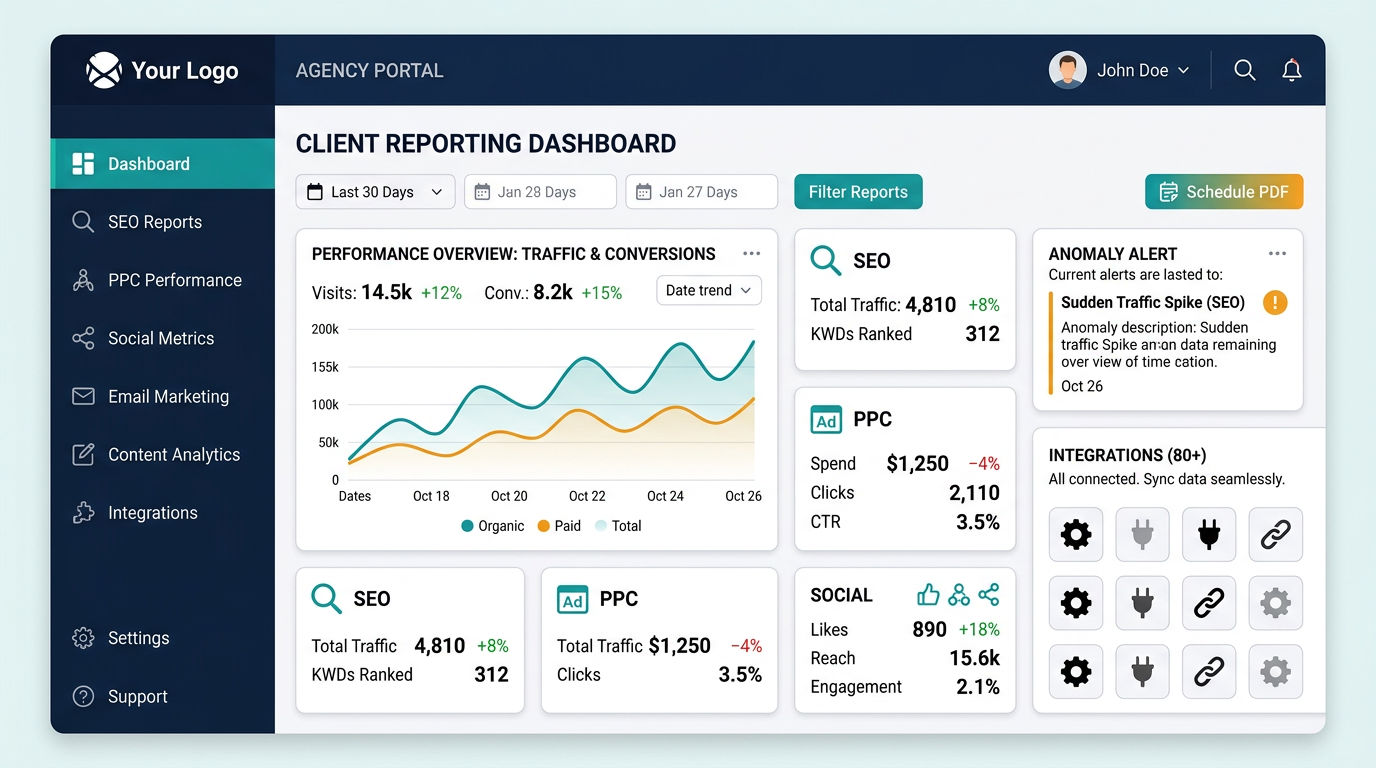
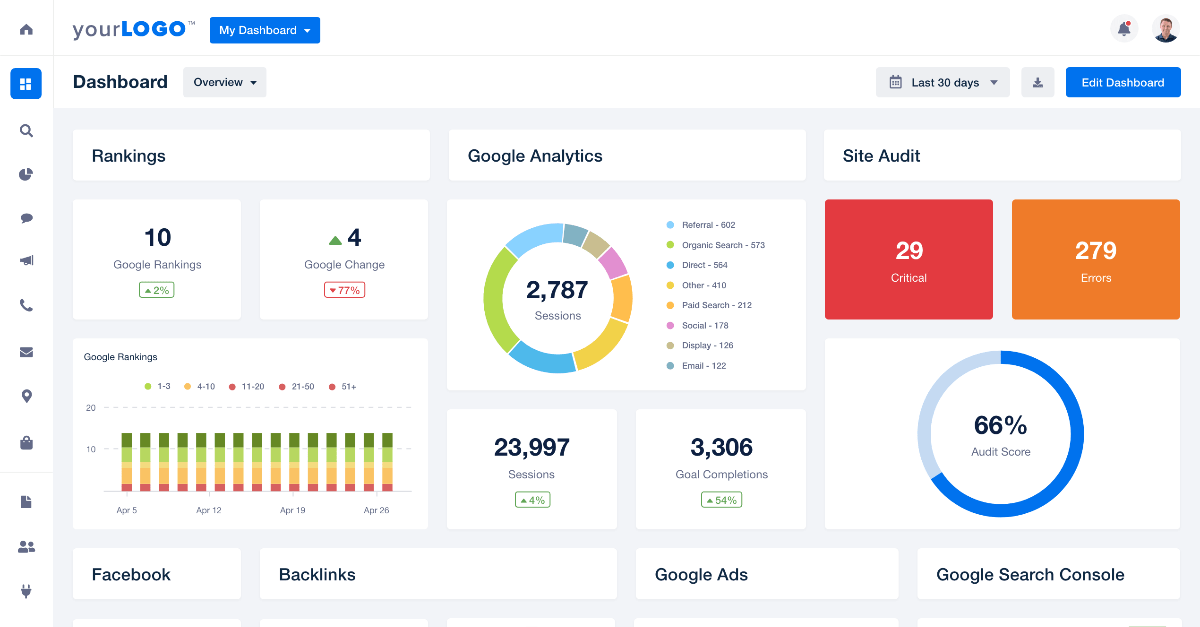
AgencyAnalytics is the best agency SEO tool for flat per-client reporting because it pulls 80+ marketing integrations into one white-label dashboard that clients can access 24/7.
Best for: Agencies that bill per client and want every channel in one branded view.
AgencyAnalytics centers on branded client portals, pre-built SEO/PPC/social report templates, customizable dashboards, anomaly detection with automated alerts, and an Ask AI feature for trend identification. It connects 80+ platforms including GA4, GSC, and Google Business Profile. Pricing is where sources disagree sharply: reported as $20/mo flat (OneLittleWeb), $20/client/mo (Whatagraph), and as an Agency plan from $179/mo for 10 clients with a Pro plan at $349/mo (Localo). At least one vendor guide crowned it the #1 agency pick — a flag worth noting since the rankings come from vendor-influenced sources.
Pros:
- ✅ 80+ integrations including GA4, GSC, and Google Business Profile
- ✅ Clean white-label client portals with 24/7 client access
- ✅ Anomaly detection and automated metric alerts across the portfolio
- ✅ Granular client and staff permissions
Cons:
- ❌ Per-client billing means cost scales with roster size
- ❌ Reporting-focused — relies on third-party data, no SEO research engine
- ❌ No native AI citation tracking for ChatGPT, Gemini, or AI Overviews
Whatagraph
 Source: https://whatagraph.com/ · captured 2026-06-27
Whatagraph is the best agency SEO tool for automated cross-channel reporting because it unifies marketing data into one semantic layer where you define a metric once and reuse it across dashboards, reports, and AI tools.
Best for: Agencies prioritizing blended multi-source dashboards over SEO research depth.
Whatagraph offers a unified data hub, custom metrics and dimensions, source groups and blends, currency conversion, white-label reports, branded client folders, and BigQuery integration. Paid plans start around $199/mo billed annually with 60+ native connectors (Whatagraph), placing it in the $200–$799/mo flat-rate reporting band. Note the provenance: Whatagraph ranked itself #1 in its own SEO reporting roundup while acknowledging author bias — exactly the kind of circular sourcing this comparison flags. As a standalone SEO research tool it's weak; as a reporting hub it's strong.
Pros:
- ✅ Strong cross-channel data blending across 60+ connectors
- ✅ Define a metric once, reuse it everywhere via the semantic layer
- ✅ White-label reports and branded client folders
- ✅ BigQuery and MCP support for advanced data teams
Cons:
- ❌ Not an SEO research tool — no keyword or backlink database
- ❌ No native ChatGPT, Gemini, or AI Overview citation monitoring
- ❌ Self-ranked #1 in its own guide (treat ranking with caution)
Localo
 Source: https://localo.com/ · captured 2026-06-27
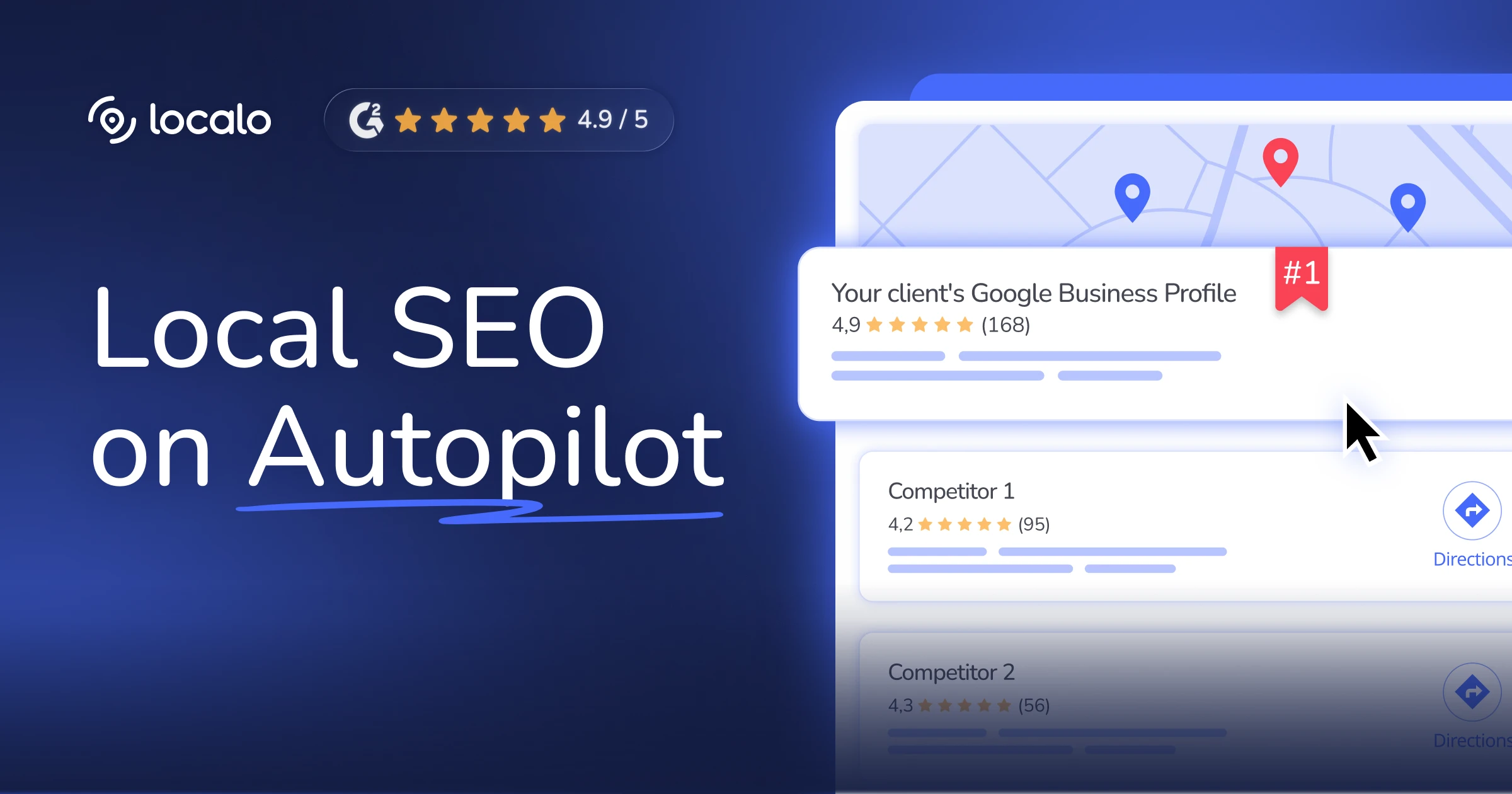
Localo is the best agency SEO tool for local and multi-location Google Business Profile campaigns, with AI-driven local pack tracking and GBP optimization at pricing well below the all-in-one suites.
Best for: Agencies running local SEO and GBP campaigns for multi-location clients.
Localo tracks Google Business Profile rankings against local competition, audits profiles for visibility issues, protects against unauthorized edits and false closure marks, generates and schedules Google Posts, and collects and responds to reviews across all locations in one view. It auto-generates weekly or monthly local SEO client reports and includes a Citations Manager plus a Localo AI Agent chat for business and trend insights. Pricing starts at $39/mo with a 14-day free trial and 30-day money-back guarantee (Localo). It crowned itself #1 in its own local SEO guide — a different #1 than three rival guides, which tells you how fragmented the category is.
Pros:
- ✅ Affordable at $39/mo, far below all-in-one platforms
- ✅ Deep GBP optimization — posts, reviews, citations, edit protection
- ✅ Free browser tools including a LocalBusiness Schema Generator
- ✅ Auto-generated white-label local reports
Cons:
- ❌ Specialized for local — not for broad organic research
- ❌ Limited AI search visibility features beyond local
- ❌ Self-ranked #1 in its own guide (vendor-published bias)
Agency SEO tools compared
For multi-client agencies, the decision comes down to billing model and whether AI citation tracking matters to your clients. Solo SEO research tools and reporting hubs solve different problems; only LLMRanks here answers the AI-citation question. The table below maps all seven on price, AI engines tracked, and core strength.
| Product | Best for | Pricing | AI engines tracked | Key strength |
|---|---|---|---|---|
| LLMRanks | AI citation tracking across all engines | From $41/mo (yearly) | 6 (ChatGPT, Gemini, AI Overviews, Claude, Perplexity, Grok) + Google | Live six-engine citation tracking |
| SEOTesting | GSC experiments | $50–$375/mo flat | 0 (LLM traffic detection only) | Controlled SEO testing |
| Semrush | Deepest all-in-one database | $139.95–$549/mo + add-ons | Limited (AI Visibility Toolkit) | ~28.5B keyword database |
| Ahrefs | Backlink data quality | $129–$1,499/mo + seats | Partial (Brand Radar) | Strongest backlink index |
| AgencyAnalytics | Per-client reporting | ~$20/client or $179+/mo | 0 | 80+ integrations, white-label portals |
| Whatagraph | Cross-channel reporting | $199–$799/mo flat | 0 | Multi-source data blending |
| Localo | Local / GBP campaigns | From $39/mo | 0 (local only) | GBP optimization depth |
The pattern is stark: six of seven tools track zero AI engines. They were built for a Google-only world that no longer exists. Our breakdown of AEO tools versus old-school SEO explains why that gap is widening.
Which one should you pick?
The right agency SEO tool depends on what your clients actually ask you to prove in 2026. Most agencies need two tools, not one — a research or reporting workhorse plus an AI visibility tracker.
If you need to know whether ChatGPT, Gemini, and AI Overviews cite your clients, choose LLMRanks. It's the only tool here that tracks all six engines live, and with AI Overviews now citing pages that don't rank in the organic top 10, this is the question clients increasingly ask first. Pair it with a research tool for keyword and backlink data.
If you run controlled experiments to prove SEO changes caused a result, choose SEOTesting — its GSC-based split testing is unmatched at $50–$375/mo. If you want the deepest all-in-one keyword and competitor database, choose Semrush, accepting that seats and sub-accounts inflate the bill. If backlink data quality is your priority and budget is flexible, choose Ahrefs, but budget $40–$80/mo per extra seat.
If you bill per client and want one white-label reporting dashboard, AgencyAnalytics pulls 80+ integrations into branded portals. If you need automated cross-channel reports blending many sources, Whatagraph is the data hub. And if your clients are local, multi-location businesses, Localo at $39/mo is the GBP specialist. For small businesses building AI visibility on a budget, start with the AI tracker and add research later.
| Your priority | Recommended tool |
|---|---|
| Track ChatGPT, Gemini, AI Overview citations | LLMRanks |
| Run controlled GSC experiments | SEOTesting |
| Deepest keyword/competitor database | Semrush |
| Best backlink data, flexible budget | Ahrefs |
| Per-client white-label reporting | AgencyAnalytics |
| Cross-channel blended reports | Whatagraph |
| Local multi-location GBP work | Localo |
For a deeper case on measuring real AI mentions instead of scraped brand references, see our guide to measuring real AI brand mentions. And if you want the honest positioning behind LLMRanks itself, the about page lays out why the platform sells no retainers.
FAQ
What is the cheapest agency SEO tool in 2026?
Group-buy services like SEO Tools Agency advertise shared access from $11/mo, but account-sharing conflicts with most vendors' terms of service. Among licensed tools, Localo starts at $39/mo and LLMRanks at $41/mo billed yearly. Free options — Google Search Console, GA4, and Bing Webmaster Tools — cover baseline data at no cost.
Which agency SEO tools actually track ChatGPT and AI Overviews?
LLMRanks is the only tool in this comparison that tracks live citations across all six major AI engines — ChatGPT, Gemini, AI Overviews, Claude, Perplexity, and Grok. Ahrefs Brand Radar and Semrush's AI Visibility Toolkit offer partial mention tracking, while AgencyAnalytics, Whatagraph, Localo, and SEOTesting track zero AI engines natively.
Should I pick Semrush or Ahrefs for my agency?
Pick Semrush for the deepest all-in-one database (up to 28.5B keywords, 142 geo databases) and unified research-plus-content workflow. Pick Ahrefs if backlink data quality matters most, but budget $40–$80/mo per extra seat. Semrush's bundled toolkits suit broad agency work; Ahrefs suits link-focused technical teams with flexible budgets.
Are SEO group-buy tools like the $11/mo options safe for agency use?
Group-buy services share account access across many users for $11–$22/mo, undercutting official pricing by 80–95%. They raise licensing and terms-of-service concerns the providers don't address, and one such site even contradicts itself on founding dates. For client-facing agency work, the data security and reliability risks generally outweigh the savings.
Is per-client billing or flat-rate pricing cheaper for agencies?
It depends on roster size. Per-client models (around $20/client/mo) stay cheap for small rosters but scale up fast — 50 clients costs roughly $1,000/mo. Flat-rate tools like Databox Premium cap at $799/mo regardless of client count. Agencies above 40 clients usually save with flat-rate; smaller rosters favor per-client billing.
Why do vendor guides disagree on the #1 agency SEO tool?
Most "best agency SEO tools" guides are vendor-published and rank their own product first — Whatagraph picks Whatagraph, Localo picks Localo, SEOTesting picks SEOTesting. They also cite G2 and Capterra ratings as objective evidence, but those scores are user-submitted and often review-gated, making the whole comparison circularly sourced rather than independently verified.
How big is Semrush's keyword database really?
Semrush reports its keyword database inconsistently across its own pages: 28.5 billion on the homepage, 26.2 billion on the Keyword Magic Tool page, and third-party roundups cite 25 billion. The differences likely reflect different snapshot dates or database definitions, but the vendor doesn't reconcile them — a reason to treat any single scale claim with caution.
Do I still need a traditional SEO tool if I use an AI visibility tracker?
Usually yes. AI visibility trackers like LLMRanks measure whether engines cite your client and generate citable content, but they don't replace keyword research or backlink analysis. Most agencies in 2026 run two tools: a research workhorse (Semrush or Ahrefs) plus an AI citation tracker. They solve different problems and complement each other.