answer engine optimizationAEOAI visibilityGEOAI SEO
What Is AEO? Answer Engine Optimization
AEO (answer engine optimization) means getting your brand named inside AI answers, not ranked on a page, with original data on what ChatGPT and Gemini cite.
AEO — answer engine optimization — is the practice of getting your brand named and cited inside an AI's answer, instead of ranked on a page of links. Ask ChatGPT or Google's AI Overview "what's the best CRM for a small business," and it doesn't hand back ten blue links. It names a few products and cites a handful of sources. If you're one of them, you just won the customer with no click and no search. If you're not, you're invisible — no matter where you rank on Google.
To find out who actually gets named, we ran an experiment: we asked ChatGPT, Gemini, and Google AI Overviews the same 30 buyer questions, three times each, and logged every source they cited — 270 answers in total. This guide explains what AEO is, how it differs from SEO and GEO, and what that original data says about getting cited.
Key takeaways
- AEO (answer engine optimization) is about being named inside an AI answer, not ranked in a list of links.
- "AEO," "GEO," and "AI SEO" describe the same goal — only GEO has a peer-reviewed academic definition.
- In our June 2026 study of 270 AI answers, the three engines overlapped on just 9–14% of the sites they cited. AI visibility is three separate races, not one.
- Reddit was the #1 cited source on all three engines — but after that, the engines diverge sharply.
- The content that earns citations: credible sources, direct quotations, and original statistics. Keyword stuffing measurably backfires.
What is AEO (answer engine optimization)?
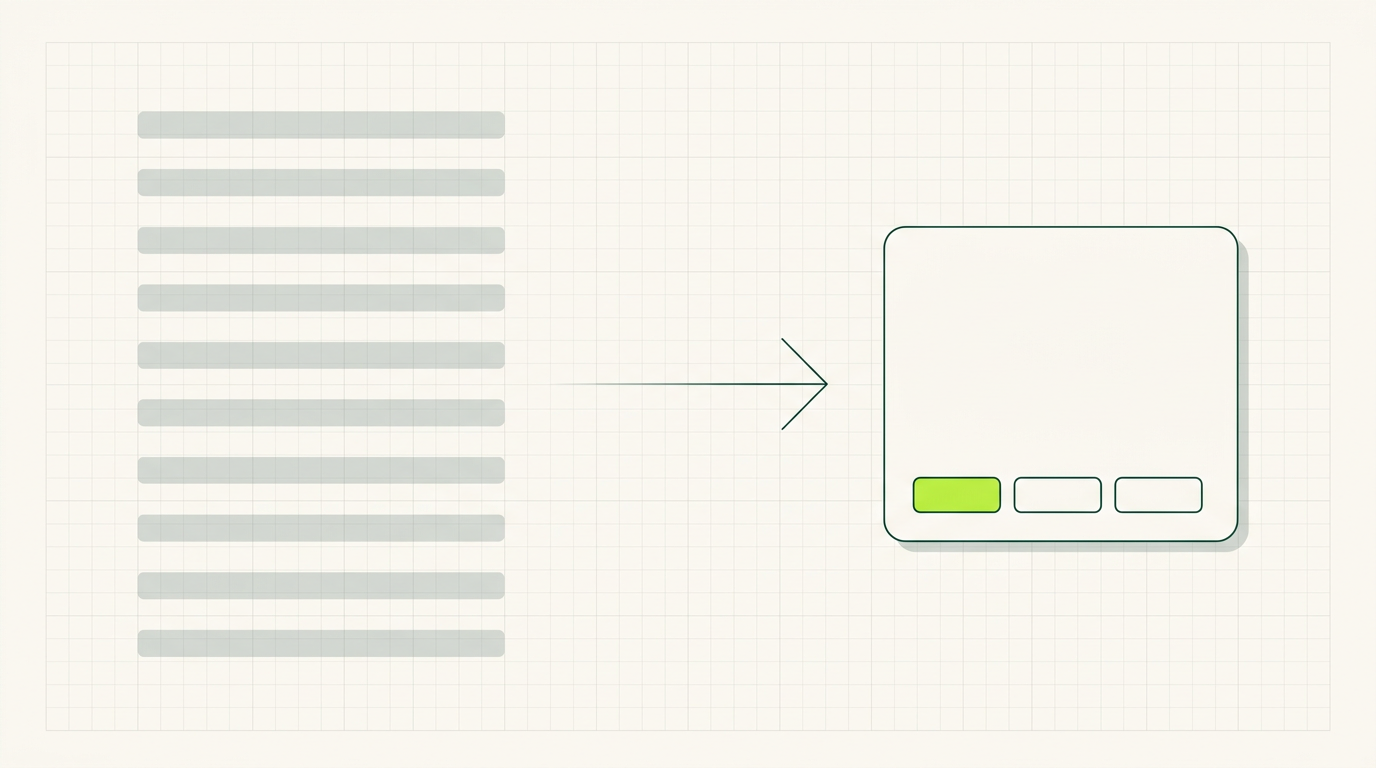
Answer engine optimization is the practice of structuring your brand and content so that AI answer engines — ChatGPT, Google Gemini, Google AI Overviews, Perplexity, and others — name, quote, and link you when they answer a question. Traditional SEO optimizes for a position in a list. AEO optimizes for inclusion in the answer.
The distinction matters because the search box is being replaced by an answer box. Google's AI Overviews now reach more than 2.5 billion users a month (Sundar Pichai, Google I/O, May 2026), and Pew Research found that users click a result on just 8% of visits when an AI summary is shown, versus 15% without one. When the answer renders inside the chat window, the user never reaches your page. Your ranking becomes irrelevant; your citation becomes everything.
So AEO reframes the whole job. SEO asked, "can I rank?" AEO asks, "will the model name me?" A page can sit at position one and never get cited, while a single well-built answer block gets pulled into AI responses again and again.
One honesty note before we go further: the term "AEO" has no single agreed inventor — it grew out of the SEO community, and in practice people use "AEO" and "GEO" interchangeably. The practice is real; the label is fuzzy. Don't trust anyone selling a clean origin story.
AEO vs SEO vs GEO: what's the difference?
People treat these as three different disciplines. They're really one idea — get cited inside AI answers — with three labels.
| Discipline | Optimizes for | The win | Where it shows up |
|---|---|---|---|
| SEO | Ranking position | A top-10 blue link | Google results page |
| AEO | Being cited in the answer | Named as a source | ChatGPT, Gemini, AI Overviews |
| GEO | Visibility in generated text | Mentioned in the summary | Generative engines |
The one real difference: GEO has the research to prove what works. It comes from a peer-reviewed academic paper — _GEO: Generative Engine Optimization_ (Princeton and IIT Delhi), published at KDD 2024, one of the top data-mining conferences. AEO is the more common industry term for the same craft. If a vendor insists AEO and GEO are fundamentally different, they're usually marketing a distinction that doesn't exist.
What AI engines actually cite: our original research
Most "AI SEO" advice is recycled from the same two vendor blog posts. We wanted our own data, so we treated the AI engines like a lab: 30 real buyer questions across six industries and five question types, asked to ChatGPT, Gemini, and Google AI Overviews, three times each, with every cited source logged. 270 answers, captured June 2026, US/English. Here's what came out — and you can download the full research report and raw datasets at the end if you want to run your own analysis.
Finding 1: the engines cite almost entirely different sources
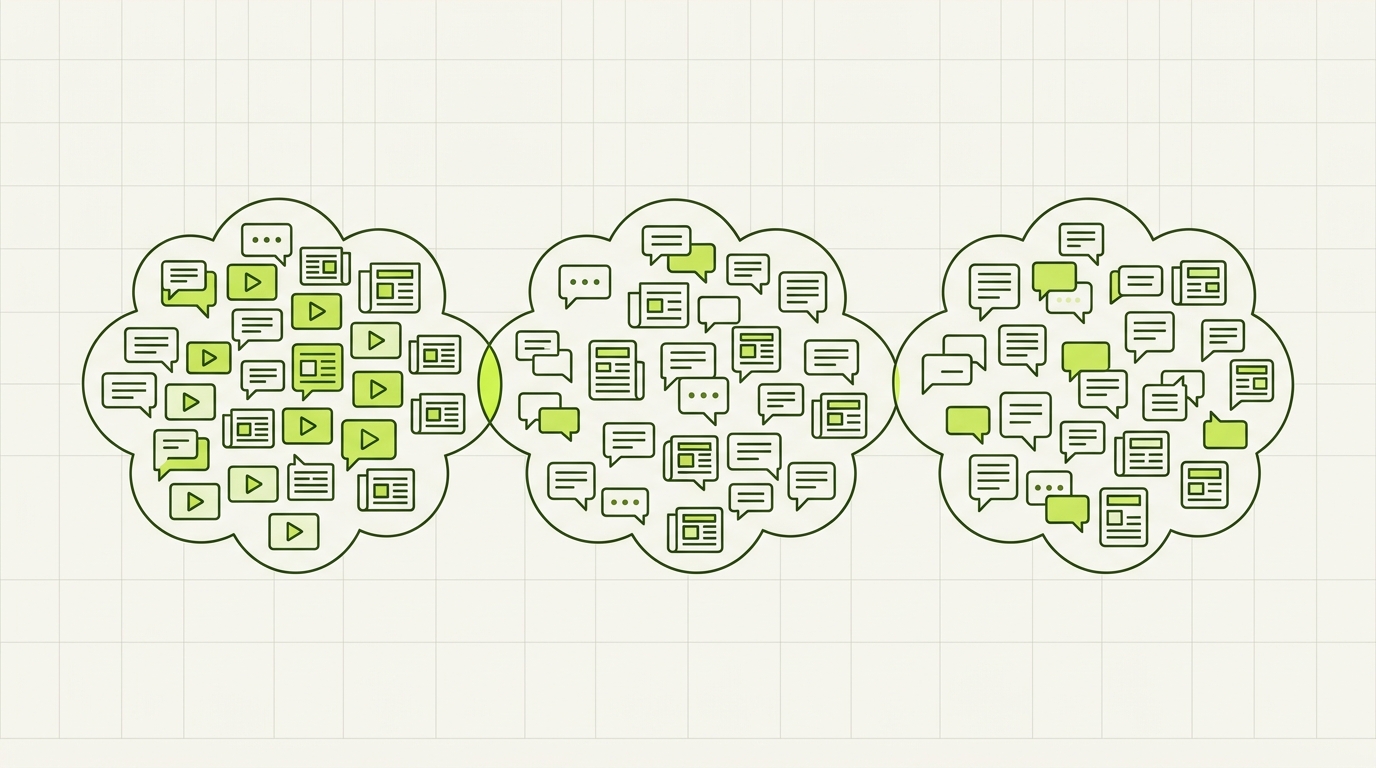
Ask the same question to all three engines and they overlap on only 9–14% of the websites they cite. Win ChatGPT and you've barely moved the needle on Gemini or AI Overviews. This is the single most important number in the study: AI visibility isn't one race — it's three, and you're scored separately in each. A tool that promises to "optimize for AI search" as one thing is selling a fiction.
Finding 2: being named is not the same as being linked
A citation (a clickable link to a source) and a mention (your brand named in the answer) are different outcomes — and every engine names brands far more often than it links them. Gemini's gap is the widest.
| Engine | Cites a source | Names a brand | Recommends with no link |
|---|---|---|---|
| AI Overviews | 100% | 97% | 0% |
| ChatGPT | 81% | 96% | 14% |
| Gemini | 58% | 82% | 29% |
Gemini links the fewest sources — on roughly 58% of answers in its consumer app — but it still recommends a specific brand by name on 82% of answers. Nearly one in three Gemini answers name a brand with zero links. That refines the popular claim that "Gemini doesn't cite anyone": it gives the fewest links, but it still recommends. On Gemini, being named (living in the model's knowledge) is a different and arguably more valuable target than being linked. This is why measuring real brand mentions, not just links, matters.
Finding 3: Reddit wins everywhere, but each engine has a personality
Reddit was the #1 cited domain on all three engines. Beneath that, they split hard. Across all 270 answers, the most-cited domains were:
| Domain | Times cited | Leans toward |
|---|---|---|
| reddit.com | 92 | #1 on all three engines |
| youtube.com | 46 | Almost entirely AI Overviews |
| forbes.com | 32 | Even across engines |
| google.com | 29 | AI Overviews' own Shopping/Flights surfaces |
| techradar.com | 18 | ChatGPT-leaning |
ChatGPT leans on editorial review sites (TechRadar, Forbes, Healthline). AI Overviews leans on the crowd and video (Reddit, YouTube). One caveat worth flagging: google.com and youtube.com are Google's own properties, and almost all of those citations came from AI Overviews answering product-shopping questions — Google's AI citing Google's own surfaces. Those aren't third-party targets you can write your way onto.
The long tail is enormous: across the study, 339 distinct domains were cited, and 44% of them appeared only once. The top-10 domains account for barely 28% of all citations. Translation: your own well-built page genuinely can get cited — the door is open if your content is citable.
Finding 4: what gets cited depends on the question
The source type shifts with the kind of question. "How-to" queries spike on video (people want to be shown); "best" and "alternatives" pull the most news and editorial listicles; "X vs Y" and use-case queries lean hardest on specific brand and product pages. One AEO strategy does not fit every query — which is exactly why you have to measure where your brand stands across engines rather than guess.
The levers that actually get you cited
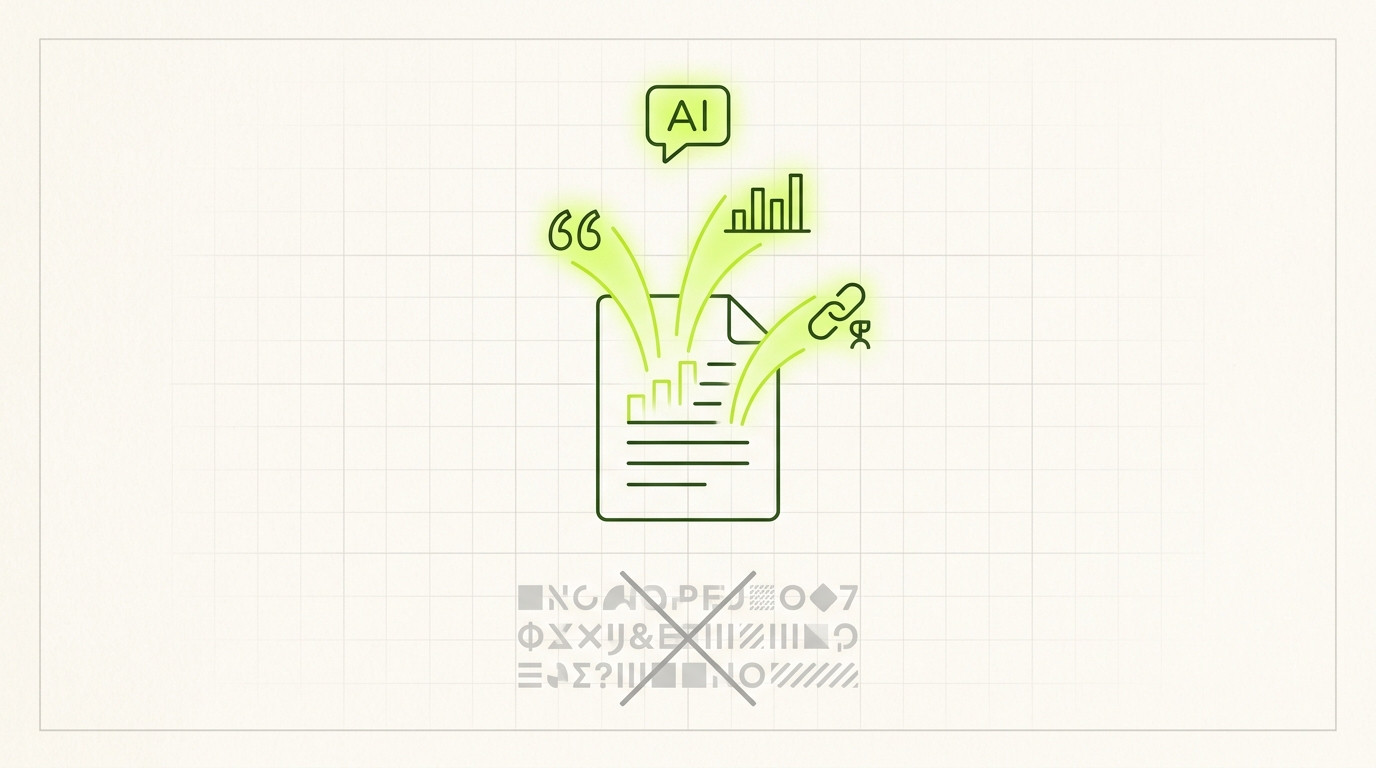
This is where the GEO research pays off. In controlled tests, three content changes moved a source's visibility inside AI answers the most:
- Cite your sources (~+28%) — link out to credible references; engines trust content that's grounded.
- Add direct quotations (~+41%) — quotable lines get lifted verbatim into answers.
- Add original statistics (~+34%) — hard numbers are the single most "liftable" content, exactly like the data in this article.
A necessary hedge on those numbers: they're best-case, relative improvements on a citation-prominence proxy metric, measured on the GEO paper's 2023–24 academic benchmark. The one real-engine validation (on Perplexity) came in around +22%. Treat them as direction-of-effect, not guarantees — but the ranking of levers has held up in follow-up work.
And notice what loses: keyword stuffing — the old SEO reflex — actively backfires, performing roughly 10% worse than baseline in the GEO study. The old playbook isn't just outdated here; it's counter-productive.
Three AEO myths to drop
- "Stuff in keywords for the AI." Backfires — it measurably reduces citation odds.
- "Just add schema markup and you'll get cited." Overstated. Schema helps machines parse you, but Ahrefs' analysis of schema and AI citations found no meaningful citation lift from it, and Google's own search advocates have said no AI engine reads
llms.txt. It's not the magic citation button it's sold as. - "Rank #1 on Google and ChatGPT will cite you." False. Ahrefs found that only about 10% of the exact pages ChatGPT cites also rank in Google's top 10 — ChatGPT correlates more with Bing than with Google. Our own data agrees: the engines diverge sharply from Google and from each other.
How we ran this study (the receipts)
Two layers of work sit behind this article. The citation study above is 270 real AI answers we measured ourselves — same 30 questions, three runs per engine, every source logged, zero errors. On top of that, the background literature was checked by more than a hundred AI research agents across nearly 30 expert sources, with every external claim fact-checked three separate ways; only the claims that survived made it in. All told, the research ran on the order of $100 of AI compute for a single article — because "trust me" isn't a citation, and we'd rather show the receipts.
If you want the evidence trail, it's all public:
- 📊 Full research report (every method, table, and verified claim)
- 🗂️ Raw citation dataset — 270 answers (JSON)
- 🗂️ Brand-mention dataset (JSON)
Where to start with AEO
If you remember one thing, make it this: AEO is plural. You're being scored in three different rooms at once, and they want different things. The brands that win in 2026 are the ones who actually measure where they stand in each — instead of guessing.
That's the practical first step. Run a free AI visibility check to see whether ChatGPT, Gemini, and Google's AI name your brand today, then use the levers above to close the gaps. For more depth, see our guides to answer engine optimization tools vs old-school SEO, choosing the best LLM optimization tools for AI visibility, and how we made LLMRanks itself AI-citable.
FAQ
What is AEO (answer engine optimization)?
AEO, or answer engine optimization, is the practice of getting your brand named and cited inside the answers AI engines like ChatGPT, Gemini, and Google AI Overviews generate, rather than ranked in a list of links. It optimizes for inclusion in the answer itself, not position on a results page.
What is the difference between AEO and SEO?
SEO optimizes for ranking position in a search results page; AEO optimizes for being cited inside an AI-generated answer. They have diverged: independent analysis in 2026 found only about 10% of the pages ChatGPT cites also rank in Google's top 10, so ranking first no longer guarantees an AI engine will quote you.
Is AEO the same as GEO?
In practice they describe the same goal: getting cited by AI engines. GEO (generative engine optimization) has a peer-reviewed academic origin in the 2024 GEO paper, while AEO is the more common industry term. Most practitioners use the two interchangeably.
What does AEO stand for?
AEO stands for Answer Engine Optimization: optimizing your content so AI answer engines name, quote, and link it when they respond to a user's question.
How do you do AEO?
The strongest evidence says to cite credible sources, add direct quotations, and include original statistics — the three content changes that most improved citation in controlled tests — while avoiding keyword stuffing, which measurably backfires. Then measure where you actually stand on each engine, since ChatGPT, Gemini, and Google AI Overviews cite very different sources.